
How Many Illegal Immigrants Are in the US?

Are you wondering how many illegal immigrants are in the US? This is a very important question that many of us have. Because of the large number of immigrants who come into our country, it is vital to understand just how many are in the US today and what their intentions are. The answer to this question can help you determine whether or not you want to take a more active role in protecting our country against illegal immigrants.
Undocumented immigrants
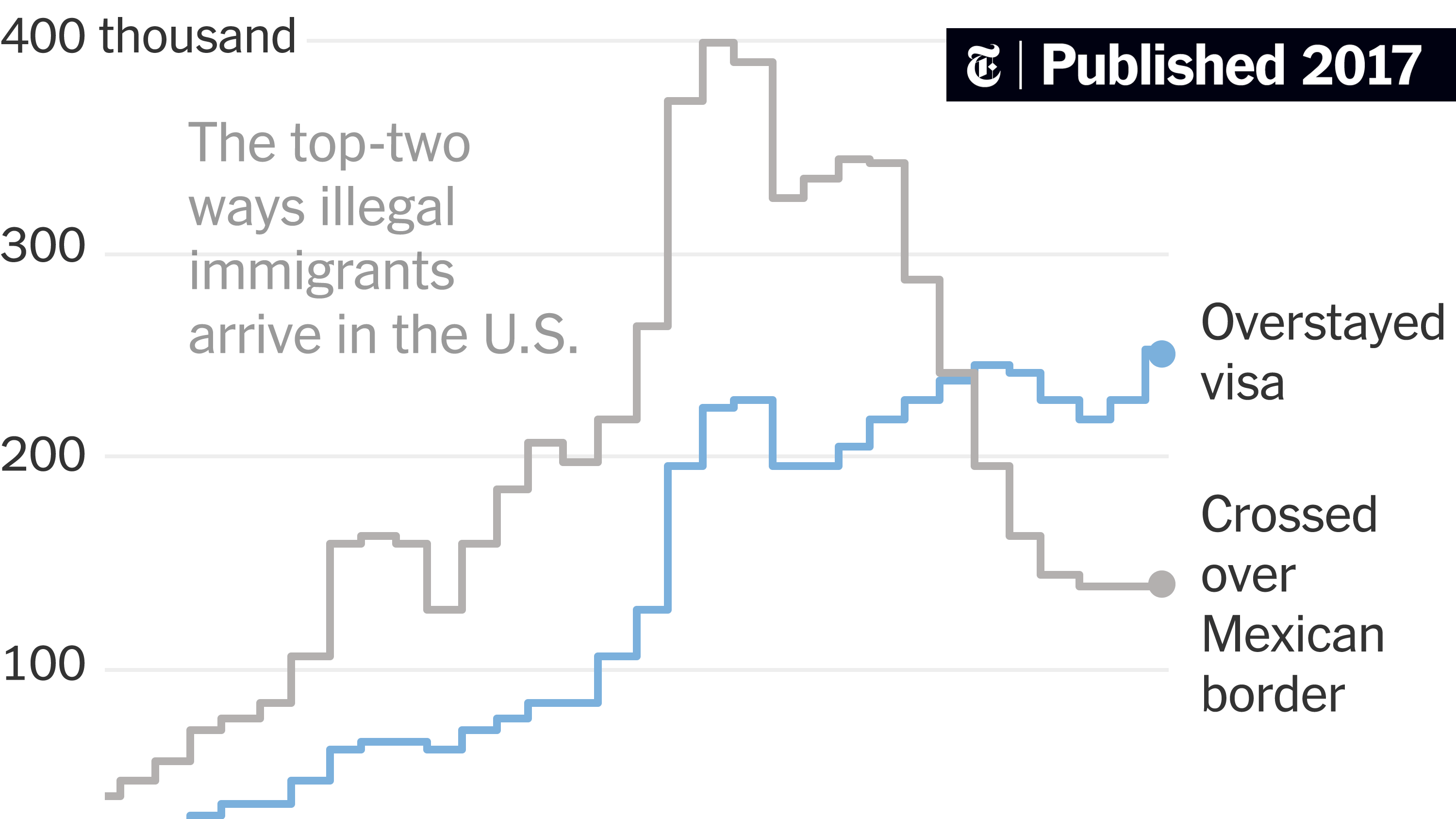
There are estimated to be about 11 million undocumented immigrants living in the United States. This includes those who have no legal status, unauthorized workers, and temporary residents. The unauthorized immigrant population is projected to be about 5 to 15 percent of the overall population, a range that is widely accepted as an undercount.
While there is no one way to count the number of undocumented immigrants, estimates vary, depending on how methodology is used. For example, the Center for Immigration Studies estimates that unauthorized immigrants comprise about 4% of the population, while the U.S. Department of Homeland Security (DHS) believes that the true figure is 10%.
The unauthorized immigrant population in the US is growing. Unauthorized immigrants are mostly from Latin America, Asia, and the Caribbean. In 2010, approximately 4.95 million of the 10.5 million undocumented immigrants were from Mexico. They also came from Central America and the Middle East.
Unauthorized immigrants have higher rates of child poverty than U.S.-born residents in the same age range. Nearly half of the unauthorized immigrants have children under 18 years of age. Their children are less likely to attend school than U.S.-born children.
The unauthorized immigrant population is disproportionately male. Among the unauthorized population, men between the ages of 18 and 39 are the majority. These men are about one-fifth of the overall undocumented immigrant population.
Moreover, unauthorized immigrants are more likely to be employed in service, construction, and low-skilled jobs than legal immigrants. Approximately two-thirds of the unauthorized immigrants have stayed in the US for at least 10 years.
Unauthorized immigrants are also more likely to live with their own children under 18 than legal immigrants. Almost half of unauthorized immigrants reside in mixed status households, with one parent or a spouse being a legal resident.
An estimated 8.8 million unauthorized immigrants are working in the United States. A large number of unauthorized immigrants work in low-skilled and low-paying jobs.
Undocumented immigrants are not eligible for public benefits. In addition, they have limited access to private health care. Many illegal immigrants pay payroll taxes and sales taxes.
Unauthorized or legal temporary migrants
There are many different kinds of immigrants in the United States. Most are from Latin America and Asia. Others come from Europe and Oceania. A small number are from Africa.
One of the most common types of migrant is the temporary worker. Several hundred thousand immigrants enter the country each year on a temporary worker visa. However, only 5,000 green cards are granted each year to low-skilled workers.
In the past decade, the number of temporary workers has been increasing. This has led to more apprehensions and more enforcement. These apprehensions have given the political right an opportunity to mobilize voters and secure resources.
The most common reason why unauthorized immigrants remain in the United States is poverty. Some unauthorized migrants do not qualify for asylum or asylee status because of economic hardship. Moreover, a large number of undocumented immigrants continue to work in the United States without legal authorization.
Although the immigration system has changed, most undocumented immigrants are still in the United States without legal authorization. In some cases, these immigrants are detained by the U.S. Immigration and Customs Enforcement.
Some immigrants can get access to publicly funded health programs. They can visit a community health center or a public health clinic. Other unauthorized immigrants rely on Emergency Medicaid for emergency care. Nevertheless, the availability of these programs has been decreasing since the early 1990s.
Asylees and asylum seekers need to meet a high evidentiary burden to obtain refugee status in the United States. Undocumented immigrants, however, frequently stay in the United States for decades at a time.
For example, unauthorized women have a much higher rate of neonatal morbidity than the general population. They are also more likely to experience seizures, fetal alcohol syndrome and respiratory distress syndrome.
However, this is mainly a function of the lack of health care services available to them. Because of these barriers to access, most undocumented immigrants do not have the same level of preventive health care services as their legal counterparts. Furthermore, unauthorized pregnant women are not eligible for health insurance, which can lead to reproductive health issues.
Estimates of the size of the undocumented population
Estimates of the size of the undocumented population are important to understanding the impact of illegal immigration on the United States. There are a number of factors that go into a final estimate. However, comparing trends over longer periods of time is crucial in order to draw accurate conclusions.
The Department of Homeland Security (DHS) estimates the size of the unauthorized immigrant population in the United States to be approximately 11.4 million. These numbers do not go beyond 2015.
Pew Research Center’s estimate for the number of undocumented immigrants in the United States has decreased from 12.2 million in 2005 to 10.5 million in 2017. They have also incorporated data from Mexico in their calculations.
The Current Population Survey (CPS) provides the only accurate estimate of the illegal immigrant population. This survey is conducted by the U.S. Census Bureau for the Bureau of Labor Statistics. It is one of the oldest surveys, measuring employment every month.
In the past, the ACS has been used to estimate the size of the illegal immigrant population. But the data is not available until 2020. That means significant re-weighting will be needed in order to get an accurate estimate.
For the current year, the DHS has a margin of error of +- 470,000 on its estimates of the number of unauthorized immigrants. Other estimates put the number of unauthorized immigrants at more than ten times that figure.
A better estimate of the size of the illegal immigrant population will depend on the methodology used. For example, the American Community Survey (ACS) has a larger sample size, which will allow more in-depth analyses.
The Pew Research Center uses the same method of estimation in its report. They have incorporated data from Mexico, as well as other sources.
Their overall method was developed in consultation with Jennifer Van Hook of the Pennsylvania State University Population Research Institute, and James Bachmeier of Temple University. Compared to other survey-based estimates, their control totals have a similar level of sampling error.
Another estimate is from Robert Warren, the principal researcher for the CMS estimate. He estimates the size of the unauthorized immigrant in the United States by subtracting the legally-resident foreign-born from the total foreign-born population.
Assaults against legal and illegal immigrants
Immigrants are vulnerable to a wide variety of forms of abuse. They may have been brought to the United States without the knowledge of their legal status, or they might not speak English well enough to understand the laws of the country. Then, they may feel afraid to report crimes, or they may be unable to get assistance.
In addition, there are specific protections for immigrant victims of crime. For instance, if an undocumented victim is a victim of domestic violence, there are special immigration laws that help to protect the victim.
Additionally, undocumented immigrants are protected under the Violence Against Women Act. This law provides for a variety of financial and administrative sanctions. It also permits the removal of conditions of residency for certain immigrant couples.
The National Immigration Project has worked to strengthen the legal rights of noncitizens under VAWA and other federal legislation. They provide legal support for attorneys, advocates, and other individuals involved in defending the rights of undocumented immigrants. Among other issues, they address the intersection between gender violence and immigration status.
Those who are victims of domestic violence or other types of violent crimes can apply for a U-Visa. Victims can also self-petition under VAWA. However, this does not mean that a victim’s immigration status is irrelevant. Often, abusive partners exploit a victim’s status and threaten their deportation. If the abusive partner has a US citizen sponsor, the victim can petition to remove this status.
There are also special federal policies that are designed to provide assistance to immigrants. One such policy is Operation Gatekeeper. This policy seeks to discourage migrants from using traditional passage routes. Many migrants enter the country illegally, and there are currently 150,000 to 200,000 unauthorized immigrants in the country. As a result of these policies, many of these immigrants are displaced from their families and communities.
In addition, there are a variety of resources available to immigrant students who are victims of sexual violence or other types of gender-based crimes. These can include advocacy groups in your area.