

What Is Trump’s Immigration Policy?
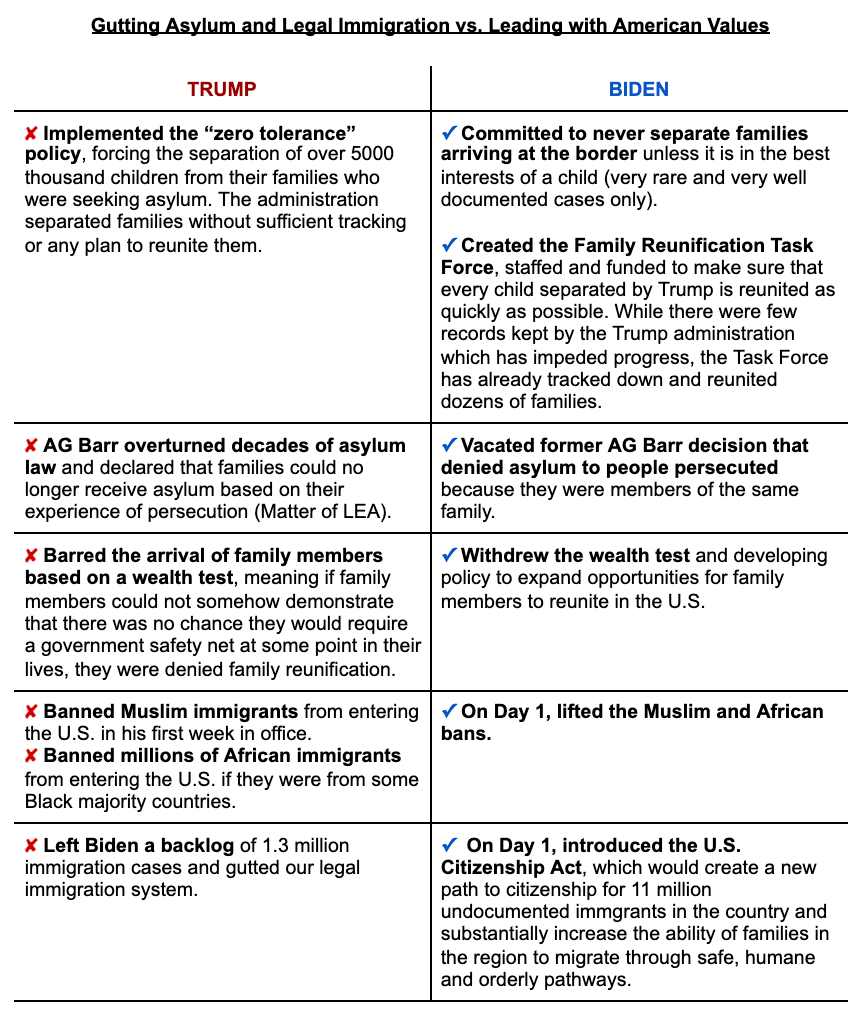
In his campaign, President Trump argued that illegal immigration is a problem and should be eliminated. He also promised to build a wall along the U.S.-Mexico border and ramp up deportations.
But he also pledged to overhaul legal immigration by reducing the number of green cards issued to people outside the U.S. He did both of these things, but also oversaw the collapse of interior immigration enforcement.
Deportation
Deportation is the process of sending someone out of the United States. This can be done for a number of reasons, including when someone is caught crossing the border without legal permission or is charged with a crime.
In addition, the government can deport people who have lived in the United States for a long time and have established relationships with people here. These people are called “deportable aliens.”
There are several grounds under which a person can be deported from the United States, including criminal offenses, fraud, and abuse of any program related to public benefits. Additionally, if a person is granted asylum in the United States, their removal proceedings stop.
The Trump administration has pushed for more harsh enforcement of immigration laws, both on the border and in interior parts of the country. These policies have been accompanied by a surge in deportation cases, which are having a severe impact on immigrants who have established ties to the United States and are living with families here.
For example, ICE has reported that the number of deportable aliens in the interior of the country is nearly triple that of a year ago. Many of these immigrants have been seized by local law enforcement and put in detention facilities, where they are often abused.
During the same period, however, there has also been a surge in the number of people who are applying for voluntary departure from the United States. These people are seeking to leave the country because they feel a threat from the government or because they don’t want to wait for a deportation order.
These immigrants are being subjected to a system that accords no weight to their ties to the United States and ignores their due process rights. They may not even have a chance to defend themselves in court.
These changes are part of the Trump administration’s effort to drastically reduce immigration to the United States, particularly by people of color. This nativist agenda is supported by a growing white nationalist movement. By keeping more people out and deporting those who are already here, the Trump administration is promoting an atmosphere of fear and resentment that affects all Americans.
Border Wall
The border wall was the signature promise of President Trump’s 2016 campaign, and it has been a central feature of his immigration policy. In February 2019, Trump declared a national emergency, directing the Department of Defense to reprogram billions of dollars in funding to construct the wall.
Despite his promises, however, the president has not been successful in persuading Congress to appropriate the funds needed to build a wall. Earlier this year, Texas Attorney General Ken Paxton filed a lawsuit against the Biden administration, claiming that it had been “flatly refusing” to spend funds previously set aside for the barrier.
A study published by the Government Accountability Office (GAO) found that the cost of building a border wall could run as high as $21.6 billion. That figure is much higher than the $1 million to $4.5 million per mile that GAO cited in 2008.
There are many reasons why a wall is constructed at a political border, but three key aspects stand out: it has a masonry foundation; it delineates the border; and it asserts a territorial claim.
As state sovereignty has been challenged by globalization and wealth inequality, leaders have turned to walls as a method of controlling flows within their own territory. These territorialized solutions to challenges are often rooted in concerns that immigrant groups may disrupt the cultural norms or social values of a state.
They are also, however, a symbolic gesture that allows for a degree of control over the broader global system. In this sense, they offer an important counterweight to the omnipotent power of globalization.
The border wall has become a staple of trump’s immigration policy, but it is also a problematic tool that can be used in ways that are detrimental to both immigrants and native communities. For example, it can lead to the destruction of natural resources.
A group of local ranchers and scientists, led by the Arizona-based conservationist David Traphagen, teamed up to document the effects of the construction of the wall on their land. The results of their research are featured in a short documentary film called American Scar, released last year. In addition, the Border Wall Working Group has created this website to provide a wealth of information about the wall and its impacts.
Deferred Action for Childhood Arrivals
The Deferred Action for Childhood Arrivals (DACA) initiative was created by the Department of Homeland Security to allow young undocumented immigrants who are low enforcement priorities to stay in the United States with temporary lawful status. DACA recipients are not granted legal immigration status or a pathway to citizenship but may apply for work authorization. The program has been in place for over five years and was recently renewed.
DACA protects around 800,000 undocumented youth from being deported and provides a temporary solution to their predicament, which has prevented them from working legally and gaining stability in their lives. Without DACA, these Dreamers face deportation to countries they have not lived in since childhood and are at risk of being stripped of their lives and their chance at a good future.
AFSC is supporting DACA by working to ensure that the Trump administration upholds its legal obligations to provide DACA protections and does not rescind it. We will also fight to defend DACA, and other protections for Dreamers, in court if necessary.
The DACA process is an exercise of prosecutorial discretion and provides deferred action to unauthorized immigrant youth who meet specific guidelines. These guidelines include that they have not been in removal proceedings, or their removal proceedings have been terminated before the request for consideration of deferred action for childhood arrivals is filed. You must be at least 15 years of age as of June 15, 2012, and you must meet other eligibility requirements in order to be considered for consideration of deferred action for childhood arriveds.
To get the most out of the DACA process, it is important to understand the policy and the implications for you if you are eligible. Please visit our DACA page for a variety of resources to help you understand the program and how it will affect your case.
Your request will be assessed on a case-by-case basis to determine whether a favorable exercise of prosecutorial discretion is warranted under the particular circumstances. Your eligibility for DACA depends on factors such as your past criminal history, if you have been convicted of a felony, certain significant misdemeanors, or three or more misdemeanors, and any prior contact with law enforcement or immigration authorities. You should discuss any underlying circumstances with an attorney before you begin the DACA process.
Temporary Protected Status
TPS is a temporary legal status that allows non-citizens from certain countries to live and work in the United States for a limited period of time. It does not provide any pathway to legal permanent residency, nor can it be used to claim asylum or other immigration benefits. It requires a beneficiary to register with the Department of Homeland Security (DHS) within a specific registration window.
TPS can be granted to nationals of a country if conditions in the country make it unsafe for that country’s citizens to return safely. This could be due to a civil war, ongoing armed conflict, or environmental disaster.
The designations are usually for six to 18 months, and DHS can extend them at its discretion. However, DHS terminated the TPS designations for several countries in 2017 and 2018.
Those who are eligible to apply for TPS are protected from deportation and work authorization, but not from removal. They must also be in good health and not pose a threat to the country for which they were originally designated.
Some of these TPS holders have been in the United States for decades. They contribute to the economy with their earnings, and have a lot of spending power.
TPS is a crucial tool for resettling migrants who were previously in danger of being sent back to their home country. Without TPS, many of these people would be unable to find jobs or support their families in the United States.
While the TPS program is a powerful tool, it must be used wisely and only when it is truly necessary. In a world where the migrant crisis is more acute than ever, it is essential to protect those who have come to the United States under these protections.
In order to ensure that those who need TPS are not removed from the United States, Congress must pass legislation and the Biden administration must follow through on its promises. In addition, a bipartisan group of lawmakers must stand up for these vulnerable people.
The Biden administration should use its statutory authority to create new TPS programs for El Salvador, Nicaragua, Nepal, and Honduras. These new TPS designations would continue to expand the country’s access to TPS protections and counter Trump’s racist termination decisions.